
Looking for website content writing services in Chicago? I’m going to show you exactly why SEO companies call me when they’re stuck or need help getting a client’s website off the ground.
Your website has a job. Actually, it has several. It needs to explain what you do. It needs to convince people that you know what you’re doing. It needs to make it ridiculously easy to take the next step. And if you want organic traffic, it needs to give Google enough information to understand when and where your business belongs in search results.
That’s where professional website content writing services in Chicago come in. I’ve worked in marketing for more than 15 years, and one of the biggest website mistakes I continue to see is businesses spending thousands of dollars making their website look incredible while treating the actual content like an afterthought.
A beautiful website with bad content is still a bad website. Let’s fix that.
Website Content Writing Services Chicago
I’ve written out so many websites for Chicago businesses but before I write a single word for a website, I do keyword research. Not after the website is built. Not after someone has already written 15 pages. And definitely not after we’ve spent six months wondering why Google isn’t sending anyone our way.
Keyword research comes first. I’ve spent more than 15 years in marketing, and my approach to website content writing services in Chicago isn’t simply about making your website sound better. I want to know what your customers are searching for, which searches are realistically worth pursuing, and exactly where those keywords belong on your website.
Then we write. Because your website shouldn’t be a collection of pages. It should be a content ecosystem designed to bring people in and intentionally move them toward becoming a customer.
Website Content Writing Starts With Keyword Research
I cannot stress this enough: Don’t build the website first and figure out SEO later. Keyword research should help determine what you build in the first place. Before developing website content, I conduct in-depth keyword research around your services, customers, competitors, industry, and geographic market.
I’m looking at things like:
- What are your potential customers actually searching?
- How many people search for it?
- How difficult will it be to rank?
- What is the intent behind that search?
- Which keywords are realistic opportunities?
- Which topics deserve dedicated pages?
- Which searches would make better blogs?
- How are your competitors currently ranking?
And sometimes we find opportunities that completely change the website strategy. You might call a service one thing internally while your customers search for something completely different. If we’re going to spend time and money creating a website, I’d rather know that before we write the page.
Every Important Page Gets a Job
Once the keyword research is complete, we start mapping those opportunities to your website. Your core pages shouldn’t exist just because every website has them. I want to determine what each page is responsible for. That includes pages such as your:
- Homepage
- Main service pages
- Individual service pages
- About page
- Contact page
- Location pages
- Other important sales pages
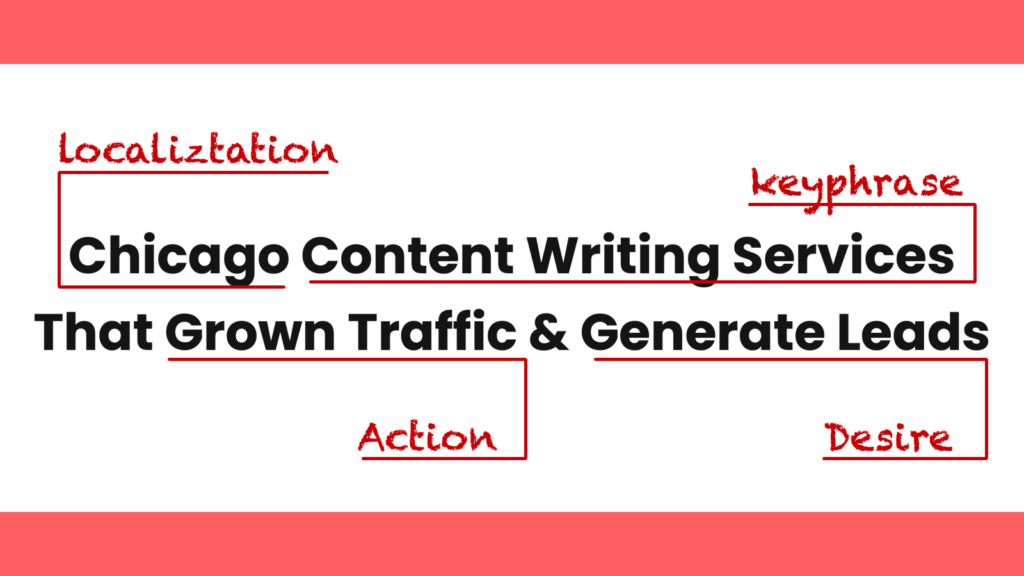
Where appropriate, we assign a primary keyphrase to these core pages and identify closely related secondary phrases that belong with them. That gives us a foundation. Instead of saying:
“Here’s our Services page. What should we write?”
We’re saying:
“Here’s the search opportunity this page is responsible for. Now let’s build the best possible page for that search.”
That’s a completely different way to build a website.
Then We Build the Content Around Your Core Pages
Your core pages are only the beginning. Once we’ve established the primary pages and keyphrases, I start looking for supporting search opportunities. This is where landing pages and blogs enter the strategy. Let’s say you have a primary service page targeting a valuable commercial keyword.
There may be dozens of related searches happening around that service. Some people are ready to hire. Others are researching pricing. Some are comparing options. Some have a problem but don’t even know what the solution is called yet. Those searches shouldn’t necessarily all lead to the same page. Instead, we can build supporting content around them.
That could include:
- SEO landing pages
- Educational blog articles
- Comparison pages
- Cost and pricing content
- Frequently asked questions
- Local content
- Guides
- Case studies
- Downloadable resources
Now we’re not asking one page to do everything. We’re creating multiple ways for people to discover your business.
Getting Traffic Is NOT the End Goal
This is where a lot of SEO strategies fall apart. Congratulations. You ranked a blog. Now what? Getting 1,000 people onto an article doesn’t mean much if 1,000 people read it and leave. Traffic needs somewhere to go.
That’s why supporting content should be intentionally connected to your sales enablement pages. If someone lands on your website through an informational Google search, we need to think about what their logical next step should be.
That could mean using:
- Internal links
- Buttons
- Images
- Calls to action
- Related service callouts
- Contact forms
- Downloadable PDFs
- Checklists
- Guides
- Lead magnets
- Consultation offers
The CTA depends on where that person is in their journey. Someone searching a broad informational question might not be ready for a giant “SCHEDULE A SALES CALL” button. That’s okay. Maybe they’re ready to download a useful PDF. Now we’ve turned anonymous organic traffic into a lead. Maybe someone reading a service comparison is much closer to making a decision. Great. Let’s direct them to the appropriate service page. SEO gets them through the door. The website needs to tell them where to go next.
Think of Your Website Like a Funnel
This is how I want businesses to start thinking about website content. Your website isn’t:
Homepage → About → Services → Contact
That’s navigation. That’s not a content strategy. A properly mapped website looks more like:
Google Search → Supporting Content → Relevant Service → Conversion
Or:
Google Search → Blog → Downloadable Resource → Lead
Or:
Google Search → Landing Page → Service Page → Consultation
Different searches bring people into your website at different stages. Our job is to understand why they arrived and create a logical path toward whatever comes next.
That’s where buttons, internal links, images, calls to action, downloadable resources, and intentional website architecture become just as important as the words on the page.
Your Core Website Pages Still Matter
Supporting content works because there’s somewhere valuable to send the traffic. That’s why your core website pages need just as much attention.
Homepage Content
Your homepage establishes what your business does, who you serve, where you operate, and why someone should keep exploring. It should also be built around a clearly defined search opportunity whenever an appropriate one exists. Your homepage isn’t the place to target every keyword you’ve ever found. It needs focus.
Service Page Content
Your service pages are often some of your most valuable sales enablement pages. If someone is actively searching for exactly what you sell, I want a dedicated page that thoroughly addresses that service. That page can explain the service, establish your expertise, answer objections, showcase relevant proof, and provide a clear path toward contacting you. Then we can build supporting content around it.
Contact Page Content
Yes, I even look at your Contact page. If a page exists on your website, I want to understand its purpose, how someone reaches it, and what we want them to do when they get there. SEO strategy shouldn’t stop because a page isn’t exciting.
Please Write Your Website for Humans
After all this talk about keywords, here’s the other side of the equation. People still have to read this stuff. Keyword research informs what we write. It does not give us permission to write garbage. You’ve probably seen copy like:
“Our Chicago website content writing company provides Chicago website content writing services to Chicago businesses looking for website content writers in Chicago.”
Kill me. That’s not good SEO writing. That’s just bad writing with keywords in it. Search engines are trying to provide useful results to humans. So let’s create something useful for humans. The keyphrase gives us direction. The content still needs personality, expertise, examples, answers, visuals, calls to action, and a reason to keep reading.
Website Content Writing Is Really Website Strategy
This is why I look at website content writing services a little differently. Yes, I write the content. But that’s not really what you’re hiring me for. You’re hiring me to figure out:
What should we rank for?
Which page should rank for it?
What supporting content do we need?
How does that content connect?
Where should the traffic go next?
And how do we turn that traffic into an actual business opportunity?
The words come after we answer those questions.
Website Content Writing Services in Chicago
If you’re looking for website content writing services in Chicago, I’m not interested in filling blank spaces on a website with 700 words because somebody said that’s what SEO requires. I want to know what people are searching for. I want to map those searches to the right pages. I want to identify the supporting content that can bring more people into your website. And then I want to build pathways that move that traffic toward your services, resources, forms, downloads, and ultimately your sales process.
Keyword research → Website architecture → Content → Traffic → Sales enablement.
That’s the strategy. And if your website is getting traffic but you have absolutely no idea where those people are supposed to go next? Yeah. We should probably talk.
Chicago Born. Chicagoland Focused.
I’m from Chicago, and I work with businesses throughout Chicago and the surrounding suburbs to help them get seen online. Whether you need a new website, social media strategy, on-site filming and content creation, SEO, blogging, or digital advertising, I can help you build a stronger presence across Chicagoland. Chicago is home. Let’s make sure your business gets noticed here.